Skip to content

A fence in Santa Fe is never just a fence. It is a design statement, a privacy solution, and a direct reflection of how well a property respects the regional character that makes Northern New Mexico so distinct. Two fencing styles dominate that conversation here: the latilla fence and the coyote fence. Both are rooted in Southwestern tradition. Both use natural wood. But they serve different purposes, carry different price points, and create very different visual effects on a property.
The short answer: a latilla fence uses peeled, straight poles—typically cedar or aspen—set vertically in a tight, uniform row to create solid privacy. A coyote fence uses unpeeled, irregular branches or poles arranged vertically in a more rustic, open pattern. Latilla fencing is cleaner and more refined. Coyote fencing is raw, organic, and deeply tied to the historic adobe compounds of old Santa Fe.
This article breaks down both options with honest detail — materials, cost, installation requirements, longevity in the high desert, and how each performs against Santa Fe’s intense UV exposure, monsoon moisture cycles, and the strict aesthetic guidelines that apply in historic districts.
Whether you are finishing a new build in Eldorado, restoring a property near the Sangre de Cristo foothills, or updating a courtyard in the city’s historic east side, understanding these two fencing types before you invest is essential. Let’s take a look at the local fence design services we can offer for your property’s fencing needs.

WHAT MAKES LATILLA FENCING A DISTINCT CHOICE
Latilla fencing is one of the most recognizable fencing styles in Northern New Mexico, and it earns that recognition through craftsmanship, not novelty. The word “latilla” comes from Spanish and refers to small, peeled poles—the same material historically used on the ceilings of adobe homes, laid across vigas to form the characteristic striped ceiling pattern seen throughout Santa Fe architecture. When used for fencing, the same material creates a clean, vertical surface with a warm, natural tone that complements stucco walls, flagstone entries, and territorial-style gates exceptionally well.
Materials and Construction
Latilla fence poles are typically made from peeled cedar, aspen, or pine, ranging from one to three inches in diameter. The poles are set side by side tightly in a vertical orientation and secured to horizontal rails, which are in turn attached to round or square posts set in concrete footings. The tight spacing creates a solid privacy screen, which is one of the primary reasons homeowners in Santa Fe choose this style for courtyards, back patios, and pool enclosures.
Cedar is the most popular material choice for lattice fencing in Northern New Mexico. It is naturally rot-resistant, handles UV exposure better than untreated pine, and holds its color longer when sealed. Aspen poles are lighter and slightly less durable but carry a beautiful pale tone that brightens shaded areas of a property. A well-built latilla fence using quality cedar poles, properly set posts, and a UV-protective sealant can last fifteen to twenty-five years in the high desert with routine maintenance.
Height, Spacing, and Visual Character
Latilla fences are most commonly built between four and eight feet tall. The tight pole spacing — typically with little to no gap between individual poles — provides genuine privacy, which distinguishes this style from coyote fencing. From the street, a latilla fence reads as a refined, textured wall. It softens the hard line of a property boundary without the cold formality of a solid wood board fence. The natural variation in pole diameter, even after peeling, gives each fence a handmade quality that fits Santa Fe’s artistic culture without looking rough or unfinished.
Considering a new fence for your property? Explore custom Santa Fe latilla fence designs with local experts who understand Northern New Mexico’s architecture, materials, and climate. Contact us today!
UNDERSTANDING COYOTE FENCING IN SANTA FE
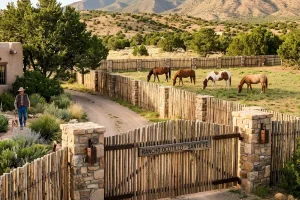
Coyote fencing has been part of New Mexico’s landscape for generations. Pueblo communities and early Spanish settlers used it to mark property boundaries, contain livestock, and protect against the wind long before modern fencing materials were available. Today, it’s still a popular choice throughout Santa Fe, Tesuque, and the rural communities around Los Alamos. Homeowners appreciate its natural look and how well it fits the region’s traditional architecture. It’s not necessarily the least expensive fencing option, but it’s hard to match the character and authenticity of a well-built coyote fence.
What Separates Coyote Fencing from Latilla?
The biggest difference comes down to the poles and how they’re arranged. Coyote fencing uses unpeeled, irregular poles, often made from cedar, juniper, or willow. Each pole has its own diameter, color, and texture, giving the finished fence a more natural, rustic appearance.
We install these poles vertically against horizontal rails, leaving some variation in the spacing. You may see gaps of one to three inches between individual poles, allowing filtered light through while creating an attractive, layered look. Latilla fencing, on the other hand, uses peeled poles placed tightly together for a more uniform appearance and greater privacy.
Because of those gaps, coyote fencing works particularly well for front yard boundaries, garden perimeters, and property lines where you want a defined space without completely blocking the view. We often see homeowners in Eldorado and the Tesuque Valley use coyote fencing along the road-facing side of their property and latilla fencing around private courtyards. It’s a practical way to enjoy the best of both styles.
Durability and Maintenance in High-Desert Conditions
Like any wood fence, coyote fencing needs to be installed with the local climate in mind. Northern New Mexico’s weather can be tough on natural materials. The unpeeled poles retain their bark, which can hold moisture during the summer monsoon season. If water collects around the base, that moisture can eventually lead to rot.
That’s why proper installation matters. We pay particular attention to drainage, post placement, and keeping the pole bases slightly above ground level. Setting posts in well-drained concrete footings and applying a penetrating wood preservative to the lower sections of the poles can also help protect the fence against moisture damage.
With proper installation and occasional treatment, a coyote fence in Santa Fe can last approximately ten to twenty years. Over time, the poles naturally weather to a soft silver-gray color. Many homeowners actually prefer this aged appearance, especially against adobe walls, decomposed granite yards, and native landscaping featuring chamisa, Apache plume, and desert willow. It’s one of the things that makes coyote fencing such a natural fit for Northern New Mexico properties.

COST COMPARISON: LATILLA FENCES VS. COYOTE FENCES
Cost is usually one of the first things homeowners want to know when comparing latilla and coyote fencing. Neither option is as inexpensive as a standard wood privacy fence, and for good reason. Both styles use natural materials and require hands-on installation. The quality of the poles, the layout, and the craftsmanship all affect the final price and how well your fence holds up over time.
Latilla Fence Cost in Northern New Mexico
In Santa Fe, a professionally installed latilla fence typically costs between $35 and $65 per linear foot. The final price depends on several things, including fence height, pole diameter, post spacing, and whether you’re adding a custom gate. For example, a six-foot-tall latilla fence enclosing a 40-foot courtyard might cost between $1,400 and $2,600 for materials and labor. Taller fences, decorative post caps, and custom entry gates will add to the total.
You’ll notice that the higher end of the price range generally reflects better materials and more attention to the details that affect durability. Quality cedar poles, properly set concrete footings, galvanized hardware, and a UV-protective sealant all help your fence stand up to Northern New Mexico’s weather. These details matter, particularly with Santa Fe’s intense high-altitude sun and the freeze-thaw cycles that occur between October and March. Saving money upfront by cutting corners can mean dealing with repairs or replacement much sooner.
Coyote Fence Cost in Northern New Mexico
Coyote fencing typically costs between $25 and $50 per linear foot installed, making it a little less expensive than latilla fencing in many cases. Your actual cost will depend on the pole type and source, fence height, and your property layout. For example, properties in the Sangre de Cristo foothills often have uneven terrain, which can mean additional work to set posts properly and keep the horizontal rails aligned.
Material sourcing is another detail worth discussing with your contractor. Locally sourced cedar and juniper poles are often a good choice for Northern New Mexico because they’re better suited to the region’s dry conditions and intense sun than materials brought in from wetter climates. When comparing estimates, ask where the poles come from and what type of treatment or protection is included. It can make a difference in how well your coyote fence holds up over the years.

HOW TO BUILD A LATILLA FENCE: WHAT THE PROCESS INVOLVES
If you’re considering a latilla fence, it helps to understand what goes into building one. The finished fence may have a simple, natural appearance, but getting that look right takes careful planning and installation. This isn’t always a straightforward DIY project, especially if your property has sloped ground, custom gates, or existing adobe walls to work around.
Post Setting and Rail Installation
Every good latilla fence starts with a solid foundation. We typically use round cedar posts measuring four to six inches in diameter, set in concrete footings that extend below the frost line. In Santa Fe, that generally means a minimum depth of eighteen inches, although twenty-four inches provides a more reliable footing given the area’s elevation and freeze-thaw conditions.
Posts are usually spaced six to eight feet apart, depending on the fence design and layout. Once they’re securely set, we attach the horizontal rails that will support the latilla poles. Most fences under five feet tall need two rails, while taller installations typically require three. Getting the posts properly positioned and aligned at this stage is important because everything else depends on a stable, level framework.
Attaching the Latilla Poles
With the posts and rails in place, install the peeled cedar or aspen poles. Each pole is cut to the appropriate height and secured vertically against the horizontal rails using galvanized screws or heavy-gauge wire. The poles should sit tightly together to create the solid, uniform appearance that makes latilla fencing so popular.
Not every pole will have the same diameter, so arranging them takes a little attention. Alternating thicker and thinner poles helps create a more even surface without losing the natural character of the wood. We also pay close attention to the top edge of the fence, particularly on sloped properties where careful measuring and adjustments are needed to keep the finished line looking clean.
Finishing and Sealing
The final step is protecting the wood. Once the poles are installed, we apply a penetrating, UV-protective sealant to the fence surface. This is especially important in Santa Fe, where the high-altitude sun delivers approximately 300 days of direct sunlight each year.
Without proper protection, cedar poles can begin to gray and develop surface checks within one or two seasons. A quality sealant helps preserve the wood’s natural color and protects it from weather exposure. Depending on the product and conditions, you can generally expect to reseal the fence every three to five years to keep it looking its best.

SANTA FE STYLE AND HISTORIC DISTRICT COMPLIANCE
Santa Fe’s Historic Design Review Board has specific guidelines for fencing materials, heights, and finishes in designated historic districts. Both latilla and coyote fencing are generally considered appropriate styles within those guidelines, given their regional heritage. However, height restrictions, color requirements, and setback rules vary by zone and property classification.
Matching Fencing to Adobe and Territorial Architecture
Latilla fencing pairs exceptionally well with the smooth stucco walls and clean lines of Territorial-style architecture. The uniform pole surface and refined appearance complement the geometric precision of Territorial window and door trim without competing. For classic Pueblo Revival adobe homes — the rounded walls, hand-troweled stucco, and low-profile silhouettes — coyote fencing is often the more harmonious choice. Its irregular texture echoes the handmade quality of the adobe itself.
Many properties in Santa Fe use both styles. A coyote fence defines the street-facing boundary and transitions to a latilla fence at the courtyard entry, creating a sequence from open and rustic to private and refined. This layered approach is both practical and architecturally coherent.
Working Within Local Regulations
Before any fencing project begins, we recommend all homeowners conduct a permit review for properties within Santa Fe city limits, especially in historic overlay zones. Santa Fe Landscapers manages this process for clients by reviewing applicable guidelines and submitting documentation when required. Properties in Eldorado and unincorporated Santa Fe County follow different rules, and rural properties near Los Alamos or White Rock may have HOA or county-specific requirements that affect fence height and material selection.
WHY CHOOSE LOCAL FENCING PROS FOR YOUR NEW MEXICO FENCING PROJECT
Choosing a local fencing contractor means working with someone who understands more than just how to build a fence. In Northern New Mexico, local experience matters. From Santa Fe’s historic district regulations and permit requirements to the region’s high-altitude sun, monsoon rains, and winter freeze-thaw cycles, there are factors that directly affect how a fence should be designed and installed. We can assist witht this process and get you pointed in the right direction.
A local expert understands which materials perform best in these conditions, why locally sourced cedar and juniper can be a better choice, and how to account for drainage, soil conditions, and frost-line requirements. They also know the differences between city, county, and HOA regulations, helping homeowners avoid potential compliance issues before construction begins.
That knowledge is especially valuable when planning a latilla fence or coyote fence in Santa Fe, NM; homeowners can feel confident it will complement their property’s architecture and withstand the local climate. A national fencing company may offer standardized designs and installation methods, but it may not have the same firsthand understanding of regional building practices, traditional New Mexico style fencing, or neighborhood-specific requirements.
With a local contractor, you’re getting more than installation. You’re getting practical recommendations shaped by years of working with the materials, properties, and conditions unique to Northern New Mexico.
Ready to upgrade your property’s curb appeal? Our coyote fencing in Santa Fe team can help you choose the right style, materials, and installation for your property. Request a free consultation!

THE ROI OF QUALITY FENCING IN NORTHERN NEW MEXICO
A well-designed and properly installed fence does more than define a property line. In Santa Fe’s real estate market, outdoor living spaces — including enclosed courtyards, private patios, and defined garden areas — are consistently cited as value-adding features. A well-maintained latilla or coyote fence that matches the home’s style can meaningfully boost curb appeal and perceived property value.
Privacy, Function, and Outdoor Living
Santa Fe homeowners invest heavily in outdoor living spaces — flagstone patios, kiva fireplaces, water features, and native plant gardens. A quality fence protects that investment by creating a defined, private outdoor room. Enclosed courtyards in the Santa Fe style are not incidental features; they are central to how residents use their properties for nine to ten months of the year. A latilla fence that creates a true privacy screen around a patio extends the home’s functional square footage in a way buyers and appraisers recognize.
Longevity as a Financial Consideration
The difference between a twenty-five-dollar-per-linear-foot installation and a fifty-dollar-per-linear-foot installation is not just aesthetic. It is the difference between a fence that requires replacement in eight years and one that performs for twenty-five years with routine maintenance. Over thirty years, the cheaper option costs more. This straightforward calculation applies directly to the high-desert conditions of Northern New Mexico, where material stress from UV, freeze-thaw cycles, and monsoon moisture is constant.
Commercial Service Specializations
For commercial properties, quality New Mexico-style fencing can enhance curb appeal while creating welcoming, functional outdoor spaces. Restaurants, hotels, and retail businesses benefit from attractive courtyard enclosures, defined property boundaries, and added privacy. A professionally installed fence complements local architecture, supports long-term property value, and reduces maintenance concerns. It’s a practical addition that still supports a professional, commercial design and architecture.

NEW MEXICO FENCING DESIGNS MADE BY THE EXPERTS FOR YOU
If you are ready to add a latilla fence, coyote fence, or a combination of both to your Santa Fe property, the next step is a site visit and honest conversation about your goals, your budget, and what will actually perform well on your specific property. Santa Fe Landscapers has designed and installed fencing across the city’s historic districts, Eldorado, Tesuque, and the foothills communities for over fifteen years. We understand the material requirements, the local safety and building codes, the installation process, and the design principles that make fencing in Northern New Mexico work beautifully for decades.
Contact Santa Fe Landscapers today to schedule a free fencing consultation or to view completed latilla and coyote fence projects in our local project gallery. We serve Santa Fe, Eldorado, Tesuque, Los Alamos, White Rock, and the surrounding Northern New Mexico communities.
FREQUENTLY ASKED QUESTIONS
What is the difference between a latilla fence and a coyote fence?
The biggest difference is the appearance and amount of privacy each provides. Latilla fences use peeled poles placed tightly together for a cleaner look and solid privacy. Coyote fences use unpeeled, irregular poles with small gaps, creating a more rustic appearance. Both work beautifully with Santa Fe architecture, and we often see homeowners combine the two styles.
How long does a latilla fence last in Santa Fe’s climate?
With quality cedar poles, proper installation, and regular maintenance, a latilla fence can last 15 to 25 years in Northern New Mexico. We pay particular attention to footing depth, galvanized hardware, and UV protection because Santa Fe’s intense sun and winter freeze-thaw cycles can take a toll on untreated wood. Resealing every three to five years also helps extend its lifespan.
How much does a coyote fence cost in Santa Fe, NM?
Coyote fencing typically costs between $25 and $50 per linear foot installed in Santa Fe. For a 40-foot fence, that works out to approximately $1,000 to $2,000. Your final price will depend on fence height, pole selection, terrain, and any custom gates. We also recommend asking about locally sourced cedar and juniper, which are well suited to our high-desert conditions.
Do I need a permit to install a latilla or coyote fence in Santa Fe?
That depends on where your property is located. Homes within Santa Fe’s historic overlay districts may need to follow Historic Design Review Board guidelines covering fence height, materials, and placement. Properties in Eldorado, unincorporated Santa Fe County, and areas near Los Alamos may have different county or HOA requirements. We recommend checking local regulations before starting your project.
Can a coyote fence be built as a DIY project?
Yes, a basic coyote fence on relatively flat ground can be a DIY project if you’re comfortable with the construction work. However, getting the post depth, drainage, and pole alignment right takes some experience, particularly in Northern New Mexico. We recommend professional installation for sloped properties, custom gates, or areas where frost and moisture could affect the fence’s stability.
What is the best wood for a latilla fence in New Mexico?
Cedar is usually our first recommendation for latilla fencing because it naturally resists rot and holds up well against Northern New Mexico’s intense sun. Aspen is another option if you prefer a lighter wood tone, although it isn’t quite as durable. Whichever material you choose, proper sealing and installation are important for getting the most life out of your fence.
Does a coyote fence provide enough privacy for a backyard?
That depends on how much privacy you’re looking for. Coyote fencing has natural gaps between the poles, so you’ll still have some visibility through the fence. It’s a great choice for front yards, gardens, and property boundaries. If you want a more private backyard or courtyard, we’d generally recommend latilla fencing or combining both styles in different areas.
How often should you seal or treat a latilla fence in Santa Fe?
We generally recommend resealing a latilla fence every three to five years, depending on its exposure to sunlight and weather. A penetrating, UV-protective sealant helps protect the cedar from fading, surface checking, and moisture damage. It’s also a good idea to inspect the poles and posts once a year so you can catch any signs of wear before they become bigger repairs.
Can you install a latilla or coyote fence on uneven ground?
Yes! Both styles can be installed on sloped or uneven properties, although the layout and installation require a little more planning. We take care to position the posts securely, keep the rails properly aligned, and adjust the vertical poles to follow the property’s grade. This is particularly important around the foothills and other areas of Northern New Mexico where terrain can vary considerably.
How do you choose between a latilla fence and a coyote fence?
Start by thinking about how you want your fence to look and what you need it to do. If privacy is your priority, latilla fencing is usually the better choice. If you prefer a more open, rustic appearance, coyote fencing may be a better fit. We’re also happy to help you compare both styles and find an option that works with your property, budget, and home’s architecture.